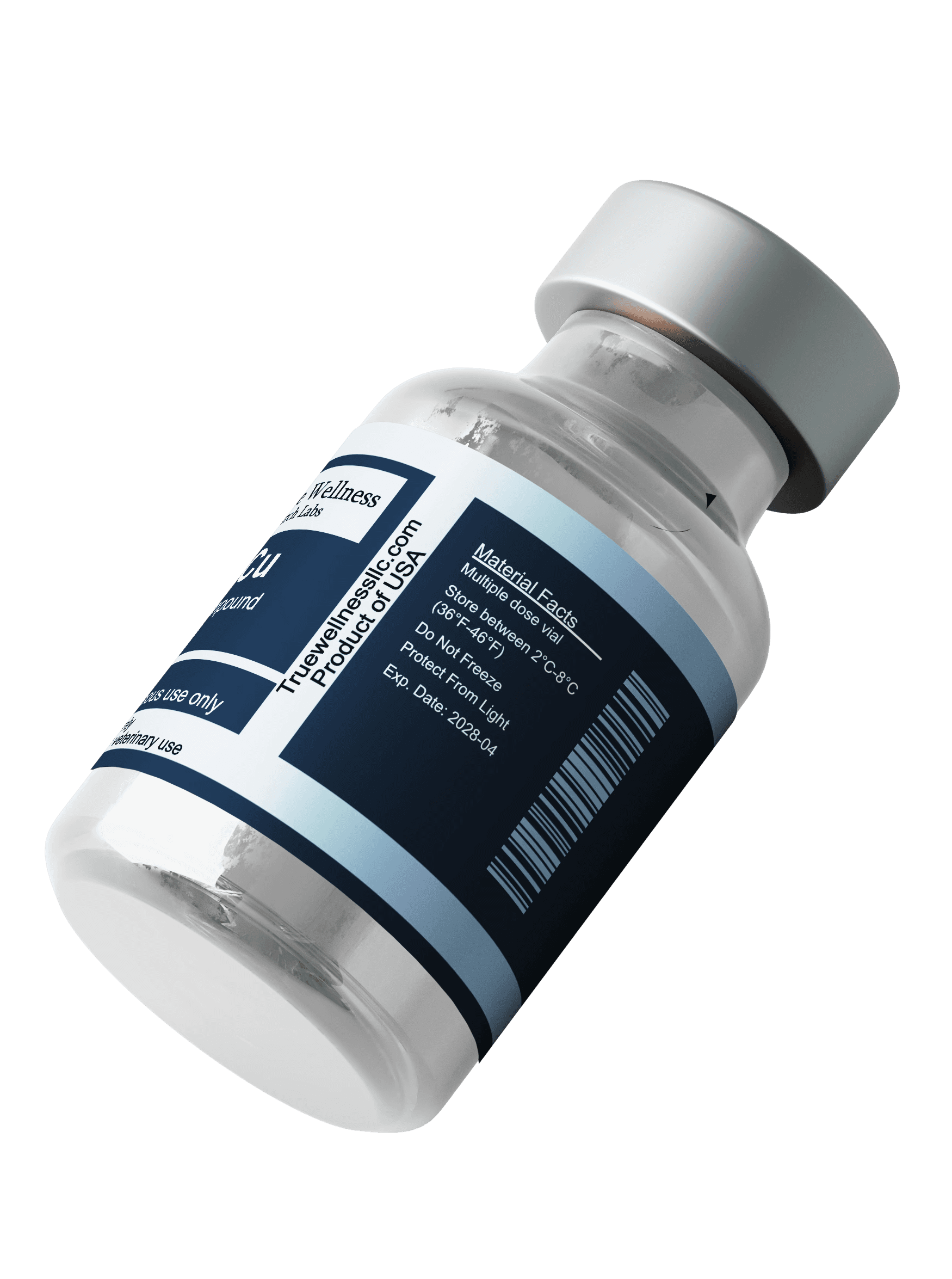
GHK-Cu
Naturally occurring copper-binding peptide studied in laboratory settings.
Experimental
Naturally occurring copper-binding peptide studied in laboratory settings.
Experimental
Half-Life
Under active investigation in research literature
Targets
Copper Transport Pathways, Extracellular Matrix Signaling, Cellular Communication Pathways
Route
Research Reference Only
Compound
Copper Peptide Complex
GHK-Cu (Copper Tripeptide-1) is a naturally occurring copper-binding peptide composed of the amino acid sequence glycyl-L-histidyl-L-lysine complexed with copper ions. It has been extensively studied in cellular biology, tissue-remodeling research, and investigations involving extracellular matrix regulation.
Naturally occurring copper-binding tripeptide.
Consists of glycine, histidine, and lysine complexed with copper.
Widely studied in tissue-remodeling and cellular-signaling research.
Investigated for interactions involving extracellular matrix regulation.
Frequently referenced in dermatological and regenerative biology literature.
One of the most extensively researched peptide-copper complexes.
GHK-Cu has been studied across multiple scientific disciplines due to its role in cellular communication and copper transport. Researchers have investigated its involvement in extracellular matrix dynamics, tissue remodeling, and signaling pathways associated with cellular maintenance.
Because it occurs naturally within the human body, GHK-Cu has become a prominent research subject in studies examining peptide-mediated biological processes. Scientific interest continues to grow as researchers explore its broader applications in regenerative and cellular biology.
Store in a cool, dry location away from direct light, heat, and moisture. Avoid excessive agitation, shaking, or repeated temperature fluctuations.
Handle using proper laboratory techniques and sterile research practices. Use clean equipment, minimize contamination risk, and keep containers securely sealed when not in use.
Follow all applicable laboratory procedures and refer to source documentation for compound-specific storage considerations.

Review the compound profile and disclaimer before making any inquiry.